Why a rack module instead of a bought-in pack
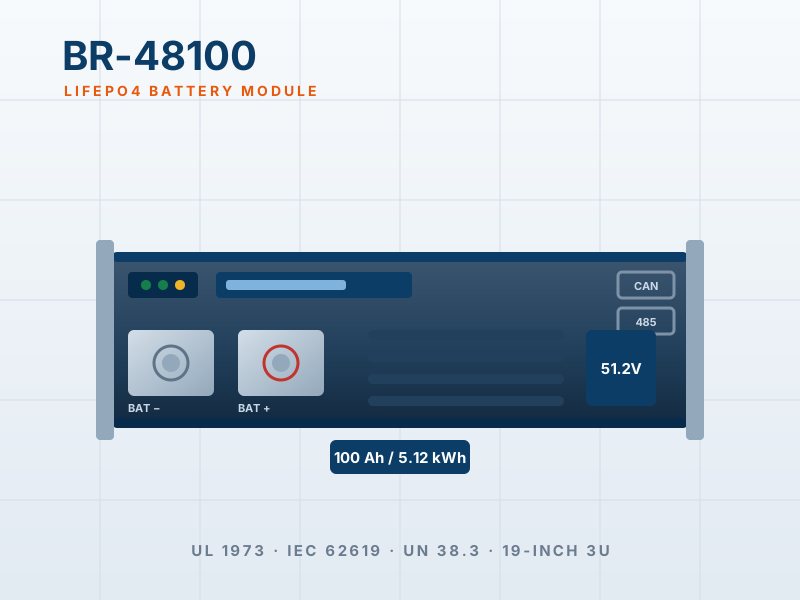
Most 48 V sites are still running flooded lead-acid because the replacement decision is framed as a large capital project. The BR-48100 is deliberately sized to be installed the way lead-acid was: one person, one shelf, standard 19-inch rails, front-access terminals.
The difference shows up over the life of the site. At 6 000 cycles to 80 % of initial capacity, a module specified for a daily discharge lasts roughly six times as long as a comparable lead-acid block bank, which changes the maintenance interval from annual battery replacement to a fleet-level refresh.
What the BMS actually reports
- State of charge and state of health — published as separate registers, so a monitoring platform can trend degradation instead of only showing a percentage.
- Per-cell voltages and temperatures — available on request over Modbus RTU, which is what makes a warranty claim auditable rather than a negotiation.
- Protection thresholds — over-voltage, under-voltage, over-current and over-temperature cut-outs are configurable at commissioning and stored in the module.
Transport and compliance
Lithium cells cannot legally ship without a UN 38.3 test summary, and that summary has to cover the exact cell and the exact pack configuration. Each BR-48100 shipment includes the UN 38.3 test summary, the UL 1973 certificate and the IEC 62619 report, so the freight forwarder does not have to chase documentation after the container is booked.
Integration and expansion
The module speaks CAN 2.0B to the site controller and Modbus RTU to a SCADA or building management system. Up to sixteen modules parallel on a single string with no external balancer, and mixed-age expansion is supported because the BMS negotiates current sharing at the string level.
Minimum order quantity is eight modules with a standard lead time of 28 days. Commissioning support, including register mapping and site acceptance test procedures, is provided to integrators at no additional cost.