Where the money actually comes from
A commercial storage project is usually justified with a single number and then audited against three. We separate them from the start, because they have different drivers, different risks and different sensitivities to tariff change.
| Value stream |
Driver |
Sensitivity |
| Self-consumption |
Solar generation vs site load shape |
Falls if the tariff flattens |
| Demand-charge reduction |
Peak shaving across the billing window |
Falls if the site load profile changes |
| Backup and resilience |
Cost of downtime on critical circuits |
Rises with outage frequency |
A site with a flat load and a low demand charge is a self-consumption project. A site with chillers, lifts and a spiky profile is a demand-charge project. The same hardware serves both, but the dispatch strategy and the battery duration are different, and quoting the wrong one is the fastest way to a project that never pays back.
One converter, fewer interfaces
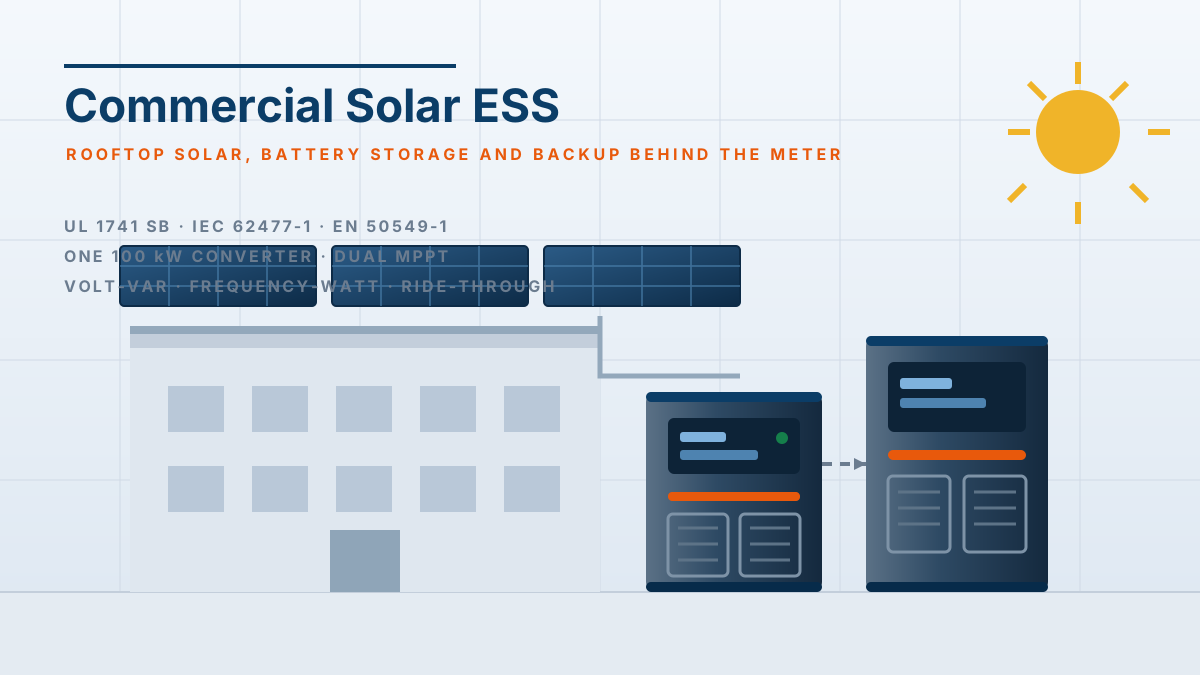
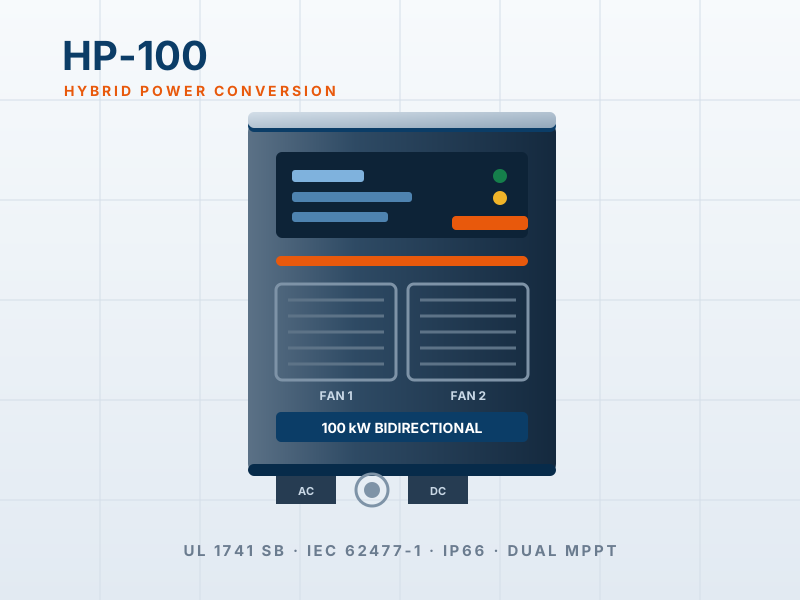
The HP-100 takes the PV array on two independent MPPT inputs and the battery string on a 200–1 000 V DC input, behind a single 400 V AC grid interface.
That removes the PV inverter, the separate battery inverter and the static transfer switch. It also removes the three communication links between them, which is where most of the commissioning time on a conventional design is actually spent.
Passing the grid connection review
Network operators ask for functions, not for products. The HP-100 implements volt-var, volt-watt, frequency-watt and configurable ride-through, and ships with the type test certificates, the settings record and the EN 50549-1 declaration.
The configuration is set in the factory against the target grid code, so the on-site engineer confirms rather than writes the characteristic curve.
Backup as a by-product
Arming island mode on the backed-up circuits adds resilience without adding hardware. The converter forms its own 400 V reference and transfers in 10 ms, which covers chillers, servers, access control and lighting through a short outage — and it is rated 110 % continuous with 150 % for 10 s so motor loads start without an oversized unit.
Delivery
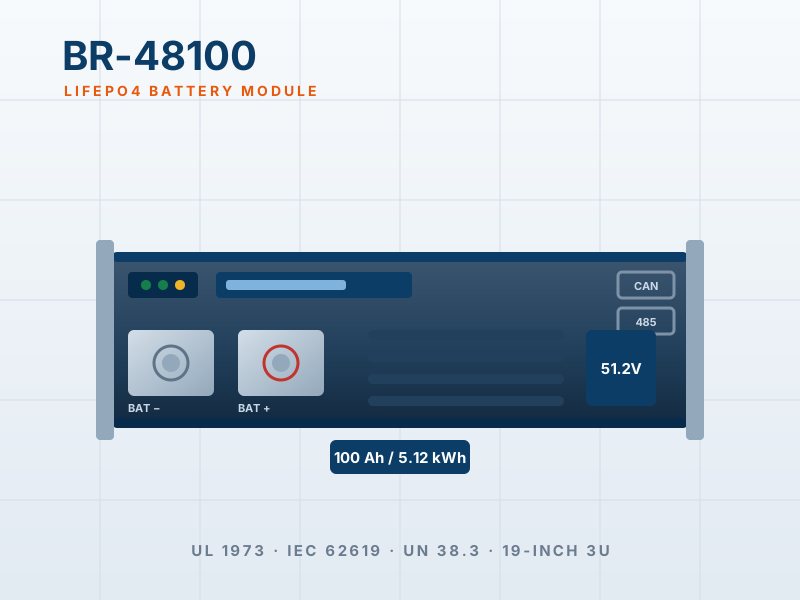
Storage modules carry a 28-day lead time, converters 42 days. Site acceptance test procedures, register maps and the compliance pack are issued with the quotation. Commissioning support is available to the installing contractor at no additional cost.