LOW997Industrial Systems

Telecom & Data Infrastructure

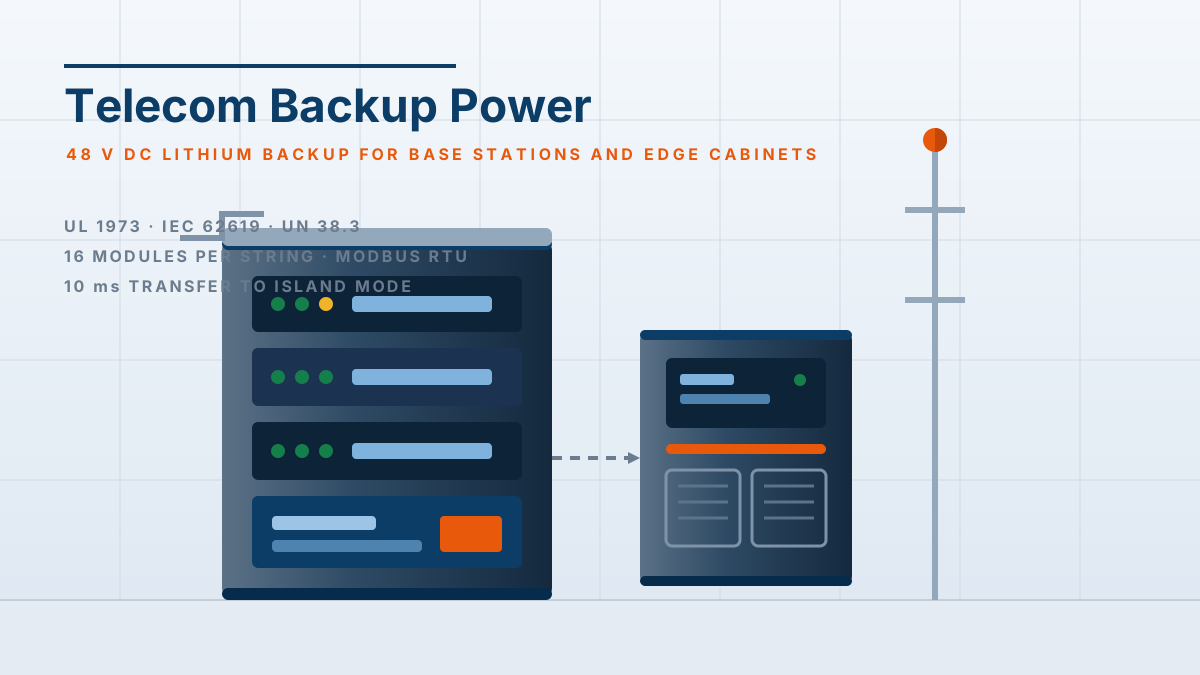
Telecom Backup Power

48 V DC lithium backup for base stations and edge cabinets — sized per site, shipped as a shelf, monitored over the same CAN bus the network already uses.

  • 48 V DC string built from 51.2 V rack modules, up to 16 per string
  • Per-module state of health over CAN 2.0B and Modbus RTU
  • Genset starts on state of charge, not on a fixed timer
  • UN 38.3, UL 1973 and IEC 62619 documentation shipped with the goods
Telecom base station cabinet with rack-mounted lithium battery modules and a wall-mounted hybrid converter
Cycles to 80 % capacity
≥ 6 000
Transfer to island mode
10 ms
Typical genset running hours
−60 %
Installs a 3U module shelf
1 person

Problems this solves

Stated plainly, because a solution that does not name the problem it removes is a product brochure.

  • Lead-acid nameplate capacity is a lie after year three

    A flooded or VRLA bank is specified at a 10-hour rate the site never operates at. Under a real 3-hour discharge its usable capacity is 60–70 % of the figure in the design document, and the site is already short before the first fault. Health checks report voltage, not capacity, so the degradation is invisible until the outage that exposes it.

  • Battery replacement is a crane job and a capital project

    A conventional 48 V bank weighs several hundred kilograms, needs ventilation design, and structurally is a room-level decision. Sites that cannot get that capital approved stay on degraded batteries for years, which converts a maintenance problem into an availability problem.

  • Genset runtime is the largest line in the site opex

    On weak grids the genset runs far more hours than the traffic load requires, because there is no storage to carry the load between outages. Fuel, servicing and noise complaints all scale with those hours.

  • No telemetry means no evidence

    When a site fails, the retrospective question is whether the battery was healthy. Without per-module state of health and cycle counts, the answer is an opinion. That is what turns a warranty claim into an argument and a service contract into a cost centre.

Our engineering approach

  1. 1Model the site load profile from the operator's own traffic and outage data, then size the string to the required autonomy at end-of-life capacity rather than at beginning-of-life — typically a 25–30 % larger nameplate than a first-pass calculation suggests.
  2. 2Ship the battery as 3U rack modules that one technician installs on standard 19-inch rails, so a capacity upgrade becomes a shelf addition instead of a building project.
  3. 3Integrate the hybrid converter on the DC and AC sides so solar, the genset and the mains all charge the same string through one managed path, and the genset starts on state of charge rather than on a timer.
  4. 4Publish state of charge, state of health, cycle count and per-cell temperature over Modbus RTU, mapped to the registers the operator's NMS already polls.
  5. 5Deliver the UN 38.3 test summary, UL 1973 certificate and IEC 62619 report with the shipment so freight, customs and the operator's safety reviewer each get the document they ask for.

Solution overview

The engineering problem

A telecom backup system is not a battery purchase. It is an availability calculation that has to hold at the end of the service life, under the actual discharge rate, at the actual site temperature.

Three numbers decide whether a site survives a six-hour outage in year four:

Design input Common mistake What we size against
Discharge rate Nameplate at a 10-hour rate The site’s real 3-hour rate
Capacity basis Beginning of life End of life at 80 % state of health
Temperature 25 °C reference The hottest month inside the cabinet

Sizing against beginning-of-life capacity at a 10-hour rate is the single most common reason a nominally adequate bank fails in service. We re-run the calculation against the operator’s own load data before quoting.

How the build goes together

The DC side is a 48 V string of BR-48100 modules on standard 19-inch rails, paralleled up to sixteen deep with current sharing negotiated by the BMS. A single module is a one-person lift, which removes the crane, the structural approval and most of the downtime from the replacement.

The AC side is a single HP-100 bidirectional converter that charges the same string from solar, from the mains in a tariff window, or from the genset. When the mains drops, the converter forms its own island and carries the backed-up circuits through a 10 ms transfer — short enough that switch-mode rectifiers in the transmission equipment do not restart.

What the operator gets to see

State of charge is the least interesting number on a healthy site. The useful ones are state of health per module, cycle count, and the per-cell temperature spread that predicts a failing module before it drags the string down.

All four are published over Modbus RTU and CAN 2.0B, mapped to registers chosen at commissioning so they land in the operator’s existing network management system rather than in yet another dashboard.

Documentation and delivery

Lithium cells cannot legally move without a UN 38.3 test summary covering the exact cell and pack configuration. Every shipment carries the UN 38.3 summary, the UL 1973 certificate, the IEC 62619 report and a declaration of conformity, prepared before the goods leave rather than after the forwarder asks.

Typical lead time for a complete site kit is 28 days for the modules and 42 days for the converter. Site acceptance test procedures and register maps are issued with the quotation, not with the invoice.
Every line below is a catalogue item with a published specification and a declared certification set. Nothing here is a configuration that exists only inside a quotation.

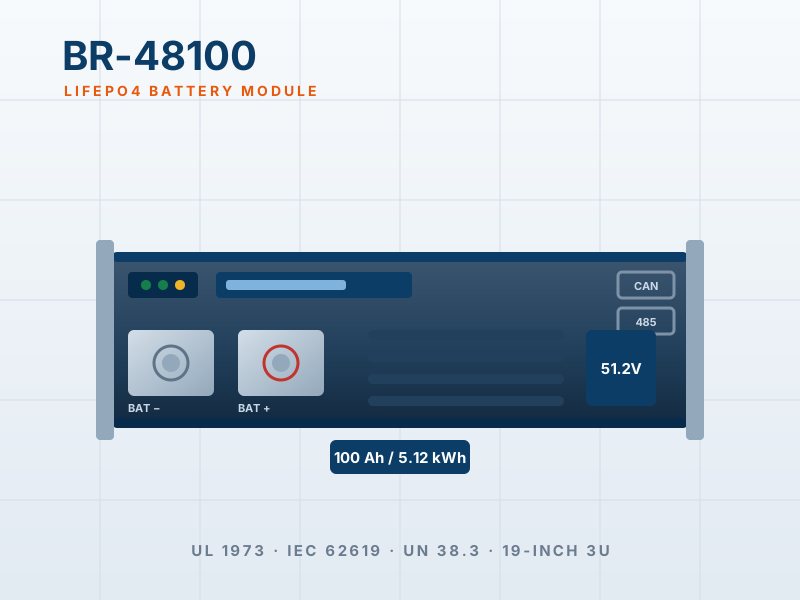
  • BR-48100 rack-mounted LiFePO4 battery module with front terminal studs and RJ45 communication ports

    Energy Storage & Power Conversion

    BR-48100 Rack-Mounted LiFePO4 Battery Module

    Model BR-48100

    51.2 V / 100 Ah lithium iron phosphate module with an integrated BMS and CAN telemetry, sized for 19-inch cabinets in telecom and commercial sites.

    Cell chemistry
    LiFePO4 (LFP), prismatic
    Nominal voltage
    51.2 V DC
    • UL 1973
    • IEC 62619
    • UN 38.3
    View specifications
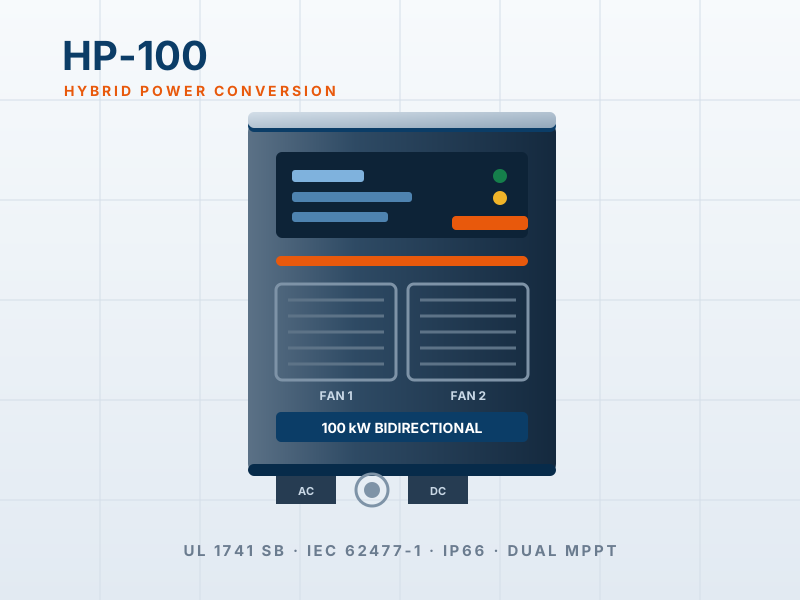
  • HP-100 hybrid power conversion system in an IP66 outdoor enclosure with separate AC and DC cable entries

    Energy Storage & Power Conversion

    HP-100 Hybrid Power Conversion System

    Model HP-100

    100 kW bidirectional converter with dual MPPT inputs and grid-forming backup transfer in 10 ms, rated IP66 for outdoor installation.

    Rated AC power
    100 kW, four-quadrant bidirectional
    AC connection
    400 V AC three-phase + N + PE, 50 / 60 Hz
    • UL 1741 SB
    • IEC 62477-1
    • IEC 62109-1 / -2
    View specifications
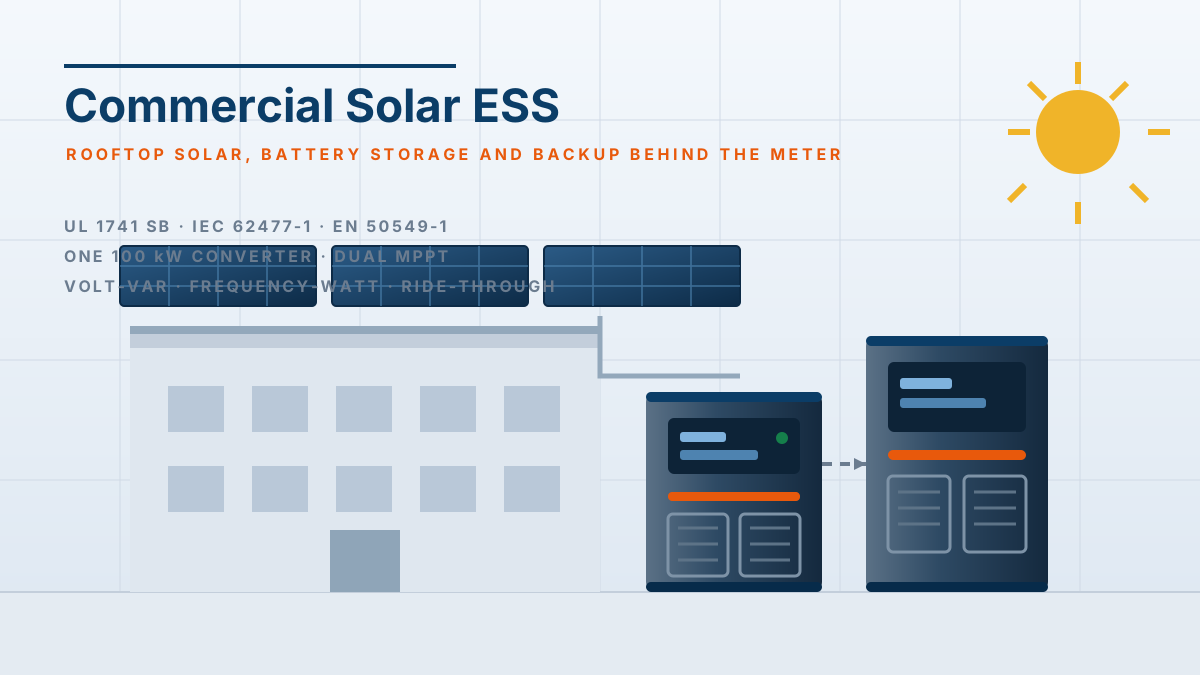
  • Commercial building with rooftop solar array, outdoor battery cabinet and wall-mounted hybrid power conversion system

    Commercial & Industrial Buildings

    Commercial Solar ESS

    Rooftop solar plus battery storage behind the meter — one converter, demand-charge reduction, and backup for the circuits that actually matter.

    Peak conversion efficiency
    98.6 %
    PV inputs per converter
    2 MPPT

    4 documented problems2 recommended product lines

    Read the solution